NK News NK Pro KCNA Watch Korea Pro

Research Tools & Data Analysis — NK Pro Features

Turn 30 years of state media
into evidence.

KCNA Watch's research tools let you chart keyword frequency, search the full archive in seconds, and track the changing prominence of the Kim family and threat-signalling language across decades of DPRK output.
Four tools. All NK Pro.

From search to signal detection

Lightning-fast full-text search across all 25+ outlets simultaneously. English and Korean text entry supported. Date range filtering — narrow to any time period. Source filtering — search all outlets or specific publications only. Advanced search commands for complex, structured queries.

When a reshuffle happens, you have the biographical context within minutes — not after an hour of archive excavation. When a new term appears in DPRK media, you can trace every prior usage back to 1996 instantly.

25+ outlets simultaneously English & Korean Date range filters Headline or full text Advanced commands

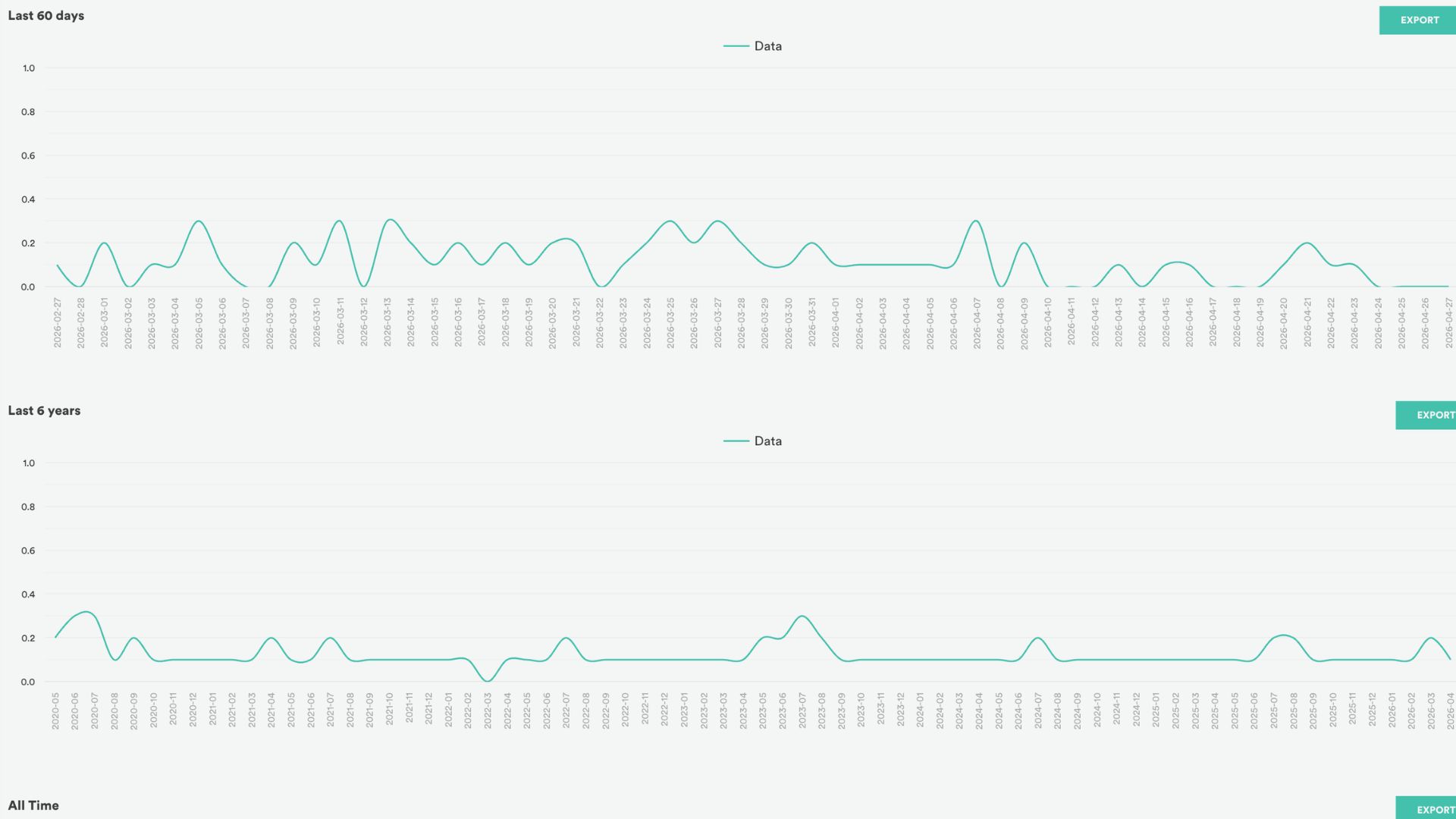
Chart the frequency of any keyword or phrase across DPRK state media output over time. Select a date range (preset 60-day, two-year, or all-time), choose one or multiple outlets, and generate a visualisation of how often your term appears in state media output.

Research applications: mapping escalation and de-escalation cycles; tracing the rise and fall of specific policy language; quantitative analysis of propaganda priorities; comparative coverage analysis across outlets. Export charts for use in reports, publications, and presentations.

A continuously updated index charting the frequency of mentions of Kim Il Sung, Kim Jong Il, and Kim Jong Un across all DPRK state media. The relative mention frequency of each leader is a documented indicator of political priorities and legitimacy framing within the North Korean system.

The relative balance between mention of Kim Jong Un versus his predecessors has shifted measurably during his tenure, consistent with documented changes in how his legitimacy is constructed relative to theirs. The index makes that trend visible and trackable over any time period.

The Threat Index scans DPRK state media daily for vocabulary typically associated with periods of elevated military tension — threat language, adversarial framing, military references — and applies an algorithm to the frequency and distribution of those terms to generate an approximate threat level indicator.

Not a classified assessment. Not a prediction. A structured open-source signal that complements other threat assessment inputs and provides an objective, reproducible baseline against which analysts can measure their own assessments. Useful for government analysts, security researchers, and journalists contextualising North Korean language during periods of elevated tension.

The tools in action

What the research tools look like

Keyword frequency charting on KCNA Watch

Keyword Frequency Charts — 60-day, 2-year, or all-time

Threat Index dashboard on KCNA Watch

Threat Index — algorithmic risk level from state media inputs

AI-Powered Analysis

The NK Intel Suite: go beyond search

NK Intel Suite — NK Pro Feature

Ask questions in natural language. Get cited answers.

The NK Intel Suite dashboard integrates directly with the entire KCNA Watch database. Instead of constructing search queries, ask plain-English questions: "What has DPRK state media said about semiconductor exports in the last six months?" and receive a structured, cited response drawn from the full archive.

The Intel Suite complements KCNA Watch's manual research tools — use keyword search and charting for systematic quantitative work, and the Intel Suite for rapid qualitative queries and briefing preparation.

Access Intel Suite with NK Pro Learn about NK Pro →

Get access

Request institutional pricing

All four research tools are included with NK Pro membership. Request institutional pricing — response within 1 business day.

Request institutional pricing Browse KCNA Watch free →

Related features